Behind the historical novel · 2 min read
The caravan and the unfinished past
A childhood caravan and a note discovered years later provide the personal starting point for The Last Gypsy, a novel of survival and revenge.
Featuring The Last Gypsy by Wilton Morley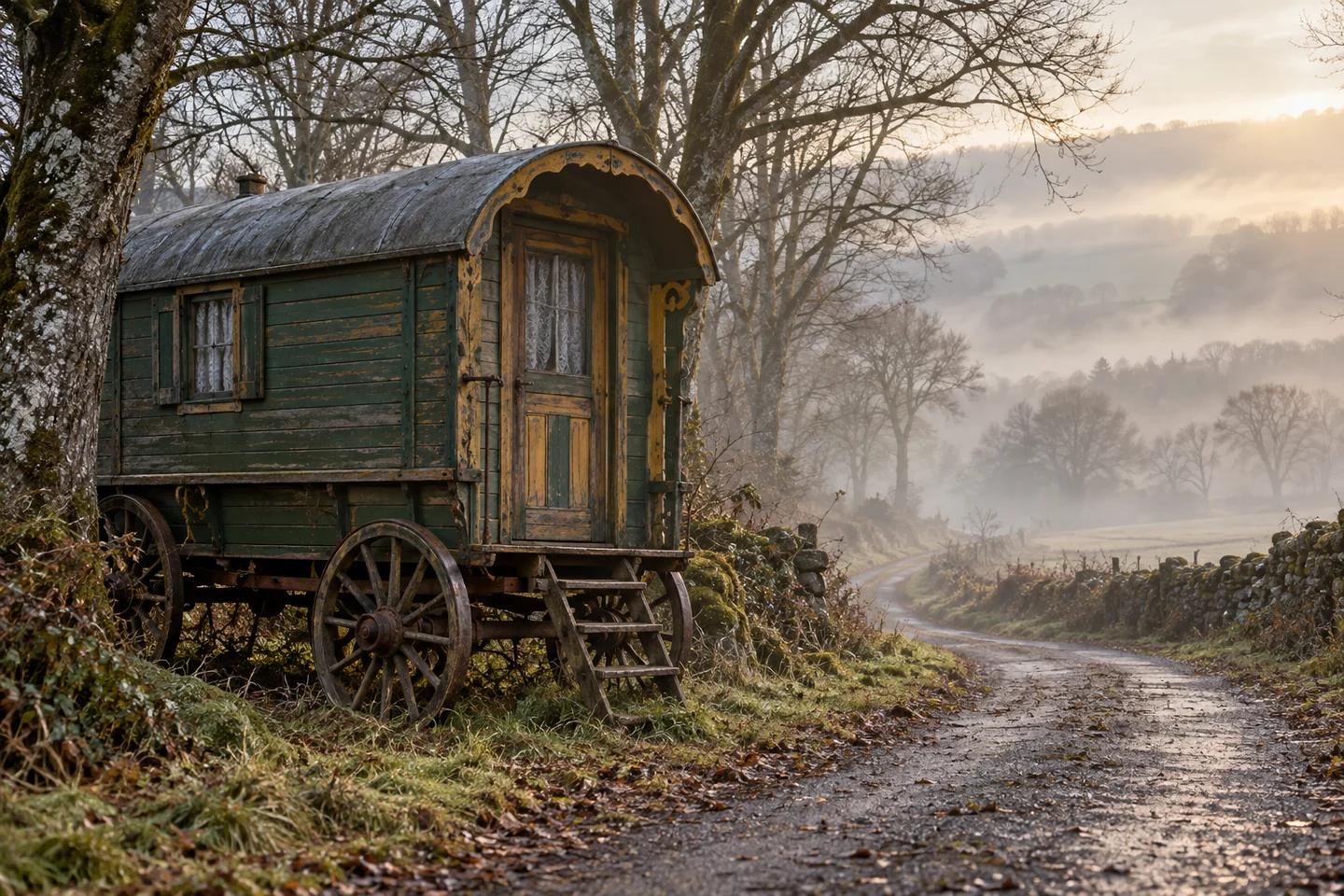
In the author’s note to The Last Gypsy, Wilton Morley recalls a Christmas morning in 1956. A horse draws a caravan towards the family home, with his father beside the driver. For the children waiting on the road, it is a memorable arrival. The object will remain part of the family’s surroundings for years.
Much later, while clearing the house after his mother’s death, Wilton finds the original bill of sale. A note in his father’s handwriting suggests that the caravan once belonged to a Romanian family who perished in the Holocaust. The possibility changes the meaning of an object already filled with his own memories.
A starting point, and a responsibility to distinguish
Wilton describes the novel’s ingredients as fact, fiction and rumour. The caravan belongs to his account of family history; the note suggests a past that the family did not witness. A separate rumour about a search for missing Nazis gives him another thread to develop through fiction.
Those distinctions matter to the reading experience. The novel is an imaginative work, and its author’s note tells the reader something about the fragments that prompted it. The uncertainty of a fragment can create a question that a novel explores without turning it into a verified historical claim.
The danger inside reassurance
The story opens at an encampment north of Paris in 1943. A policeman arrives with a warning about a raid and reassurances about what compliance will mean. The encounter makes trust an urgent concern. Advice that sounds protective may offer very little safety to the people receiving it.
From that beginning, the novel enters the consequences of persecution and the desire for revenge. Readers drawn to historical fiction about the aftermath of violence will find an opening concerned with what people know, what they are told and what they can afford to believe.
Begin with the excerpt below, then continue into The Last Gypsy for the story that grows from those personal memories and unresolved questions.
Reading notes on The Last Gypsy, the Author’s Note and the opening chapter.
From the book
The Gypsies — Encampment. North of Paris. 1943.
The old man trusted Montclaire. As policemen went, he was one of the better ones. In his late fifties, Montclaire had never moved up through the ranks as his wife had hoped he would do. He had a reputation for bucking the system, going too easy on the criminal classes.
The Last Gypsy · Wilton Morley