Art & historical fiction · 2 min read
What do we choose to shelter?
Paris appears calm in April 1940. For the Peggy Guggenheim of The Shelterers, protecting an art collection is already an urgent and deeply personal question.
Featuring The Shelterers by Wilton Morley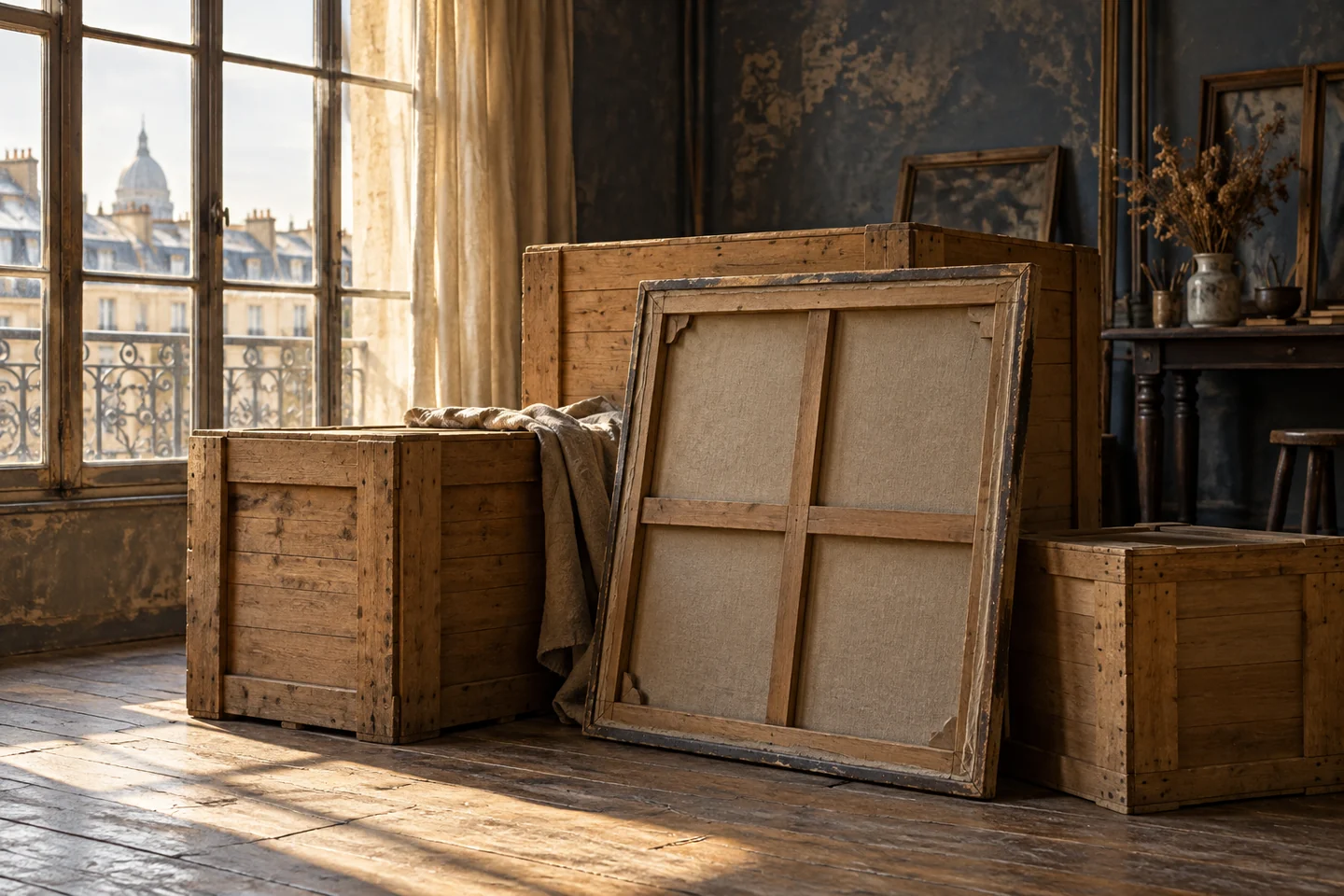
A city can look reassuringly ordinary even when its future is becoming uncertain. In the prologue to The Shelterers, Peggy Guggenheim leaves the Ritz and walks through Paris in April 1940. The spring weather is warm. People appear to be going about their lives. The headlines suggest another story.
Wilton Morley places the reader inside that uneasy gap. His fictional Peggy is thinking about her collection and how to protect it as war approaches. Paintings and sculptures are also choices, attachments and years of conviction. Their possible loss has an intimate dimension.
Art becomes a practical problem
The opening turns the question of preservation into action. Who will shelter the work? Who decides whether it deserves protection? What happens when an institution’s judgement fails to match the collector’s own belief in its value?
Peggy’s anger and determination give those questions a human voice. Art is something to argue over, buy, move and defend. The novel draws its energy from the conversations and decisions around the collection, allowing the larger crisis to enter through individual concerns.
A personal doorway into historical fiction
Before the novel begins, Wilton’s author’s note recalls meeting Samuel Beckett while managing a small London theatre in 1978. The encounter supplies a personal connection to one of the historical figures who appears in the fiction. It also establishes the book’s interest in the person encountered at close quarters.
The remembered meeting and the imagined Paris scenes offer different ways of approaching a familiar name. One is a recollection; the other belongs to a novel. Together they invite readers interested in art and theatre to enter a world through people, gestures and conversation.
If you enjoy historical fiction that begins with a private question and opens onto a larger upheaval, start with the passage below. Then continue into The Shelterers and the lives gathered around its question of what—and whom—we choose to protect.
Reading notes on The Shelterers, the Author’s Note and the Paris prologue.
From the book
Prologue — Paris, April 1940
When she left the Ritz later that afternoon, Peggy Guggenheim headed northwest on the Place Vendome. It had been an unusually warm spring and today was no exception. The Parisians she passed seemed not to have a care in the world; other than the headlines on the billboards, there was not the slightest hint of impending doom.
The Shelterers · Wilton Morley